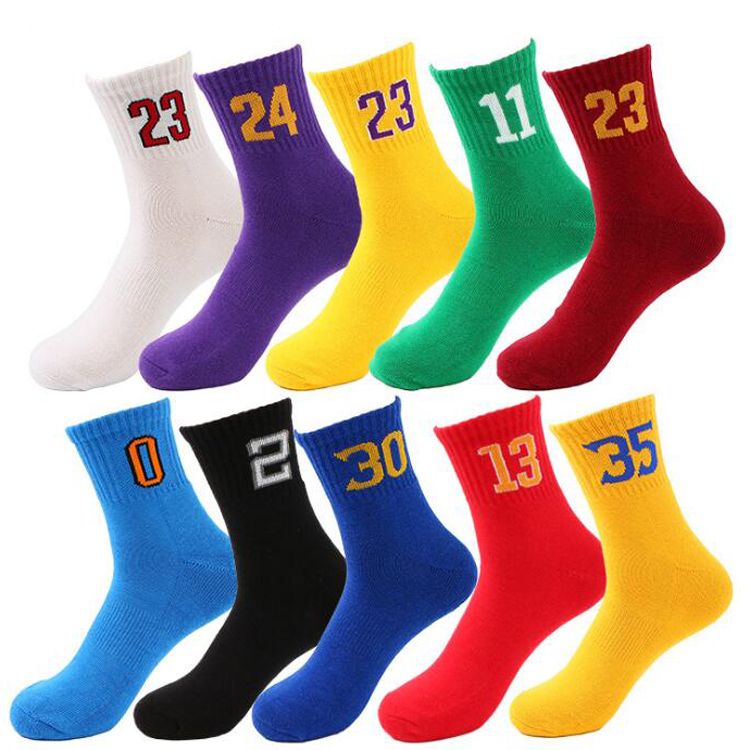
The OEM vs ODM difference comes down to one question: who designed the sock? If you bring completed artwork and specifications and the factory builds to them, that is OEM. If the factory already holds designs and you select one to brand, that is ODM. That single distinction drives cost, timeline, minimums and how much control you keep over the finished product.
Most confusion later trace back to not settling this at the start. Buyers who ask for OEM pricing on an ODM product, or expect ODM speed on a bespoke design, end up frustrated on both sides. Choosing deliberately is what avoids it.
The four models side by side
| OEM | ODM | White label | Private label | |
|---|---|---|---|---|
| Who designs it | You | Factory | Factory | Factory or jointly |
| Who owns the design | You | Factory | Factory | Usually the buyer’s spec is protected |
| Development time | Longest | Shortest | Shortest | Between the two |
| Typical minimum | Higher | Lower | Lowest | Between the two |
| Differentiation | Full | Shared with other buyers | Shared | Moderate to full |
OEM – you design, we build
You supply artwork, construction spec, measurements and tolerances; the factory executes. You own the design. Development takes longest because everything is being proven for the first time, but the result is genuinely yours, and nobody else can be sold the same thing.
Consequences to plan for: more back-and-forth before the first acceptable sample (typically 3-7 days to sample, sometimes iterated), and a real cost for setup because gauges and patterns are being programmed for your spec. Our route for this is OEM socks.
ODM – we design, you brand
The factory holds existing constructions and you apply your branding and packaging. You do not own the design, and other buyers may be sold variations of it. Development is fast because the hard problems have already been solved, minimums are friendlier, and you can see what you are getting before committing.
The honest downside is differentiation. In a category where branding carries the premium, sharing a base construction limits how distinct the product can be. That trade-off is exactly what you are buying when you choose ODM.
White label – identical product, your label
Strictly speaking, white label means an unbranded product multiple buyers label as their own. It is the fastest route to market and the weakest defensibly different position, and it suits testing demand or completing a range rather than building a brand on.
Private label – made for you, not generally sold
Private label sits between ODM and OEM. The factory makes to your specification and generally does not sell that specific product to others, even though some underlying design elements may be shared. It is often the pragmatic answer for buyers wanting distinctiveness without full development.
Which should you choose?
Choose OEM when the product itself is the proposition – a specific construction, a performance claim you can substantiate, or a look nobody else has. The development cost buys something you can defend.
Choose ODM when speed and cost matter more than uniqueness – testing a category, completing a range, or launching in a market you are still learning. Getting to market sooner and learning from real sales often beats getting it perfect.
Choose private label when you want protection from identical competitors without full development cost.
Choose white label when you need to test with minimal commitment and intend to move up the ladder once demand is proven.
None of these is inherently superior. Buyers get into trouble by choosing one and expecting the economics of another.
What does not change between models
Our operating parameters are the same whichever you choose:
- MOQ of 300 pairs per color – set by per-colourway setup cost, not by the model
- 3-7 days for sampling
- 5-25 days for production after sample approval
What does change is how many development iterations you are likely to go through. An OEM programme may need two or three rounds; an ODM one often needs none because you started from something already proven.
The question nobody asks early enough
Who owns the design if you later want to move production?
With OEM the answer is you – but only if that was agreed, in writing, before development began. With ODM the factory retains ownership and you generally cannot take the design elsewhere. Sorting this out at the start costs nothing; sorting it out later is expensive and sometimes impossible.
Also worth settling early:
- Whether the factory may sell your design to other buyers
- What happens to tooling, pattern files and specification documents
- Whether branding elements – labels, hangtags, printed elements from extra custom options – are held exclusively for you
Getting started
Bring whatever you currently have. Buyers with finished artwork go straight to OEM; those with a mood board or nothing more than an end use usually start ODM, then move up once the product proves itself.
Start at custom socks from Sockmader, or look at what exists and is proven through socks wholesale. Further background sits on our oem vs odm difference reference page.
FAQ
Is OEM always more expensive?
Development is more involved, so yes, typically – but you own something unique. If differentiation is what you are buying, that is not waste.
Can I start ODM and move to OEM later?
Yes, and it is often the sensible path. Prove demand against an existing construction, then invest in bespoke development once sales justify it.
Do I own the ODM design?
Usually not. The factory retains it. If owning your design matters, say so at the start – the pricing reflects it.
Is the minimum order different between models?
No. Minimums follow per-style setup cost, not the collaboration model.
Which is better for a first launch?
Usually ODM or private label. Speed and lower development risk let you learn from the market before committing to full OEM development.
—
*Parameter note: MOQ, sampling and production windows reflect Sockmader’s own figures. Confirm design-ownership terms in writing before development begins – this cannot be settled retrospectively.*