Designing a grip sock is a three-variable problem. You are choosing a dot pattern, deciding how much of the sole it covers, and placing your brand somewhere visible. Those variables are not independent: a dense pattern leaves less room for a logo, a full-coverage sole costs more than a patch, and the silicone color you pick has to survive both production curing and fifty wash cycles. Most first designs fail on one of these three, usually because the artwork was drawn as if it were a flat print rather than a raised silicone deposit on a curved, stretching surface.
Every idea below can be produced through custom grip sock range, including jacquard, printing and retail-ready packaging.
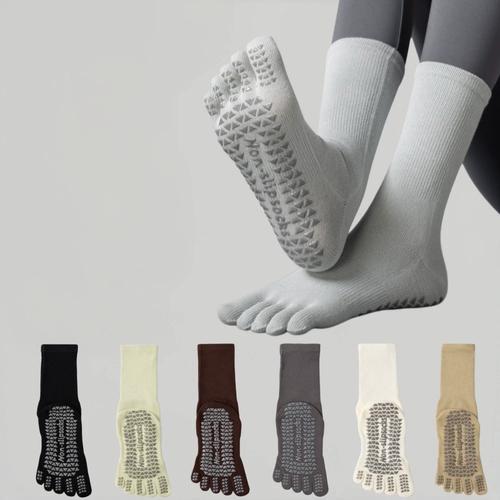
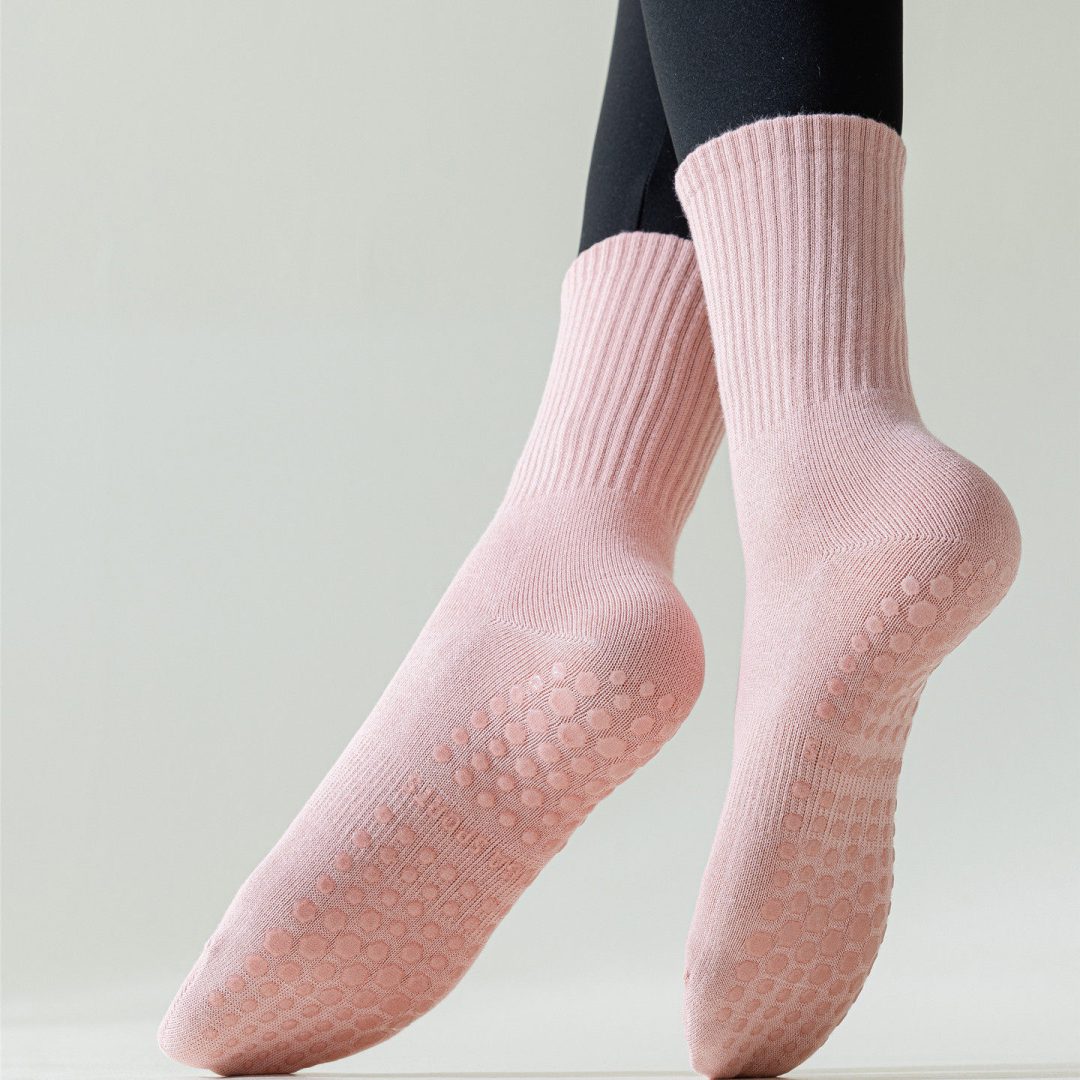
Start With the Dot Pattern Four patterns cover the market. Small round dots in a grid give even, all-round grip and the softest feel underfoot — the default for yoga and barre. Larger oval or teardrop dots grip harder but feel more present, which suits trampoline parks and hospital use where slip resistance outranks comfort. Striped or wave patterns channel sweat away and look distinctive, though they cover less surface area. Bespoke shapes — a logo formed from dots — are possible and impressive, but they reduce effective grip area, so they work best as a highlight inside a functional pattern rather than as the whole sole.
Decide Coverage by Use Case Coverage runs from a heel-and-ball patch to a full sole print extending over the toes. Heel-and-ball covers the two points where load lands and keeps silicone use low, which suits high-volume studio socks. Full-sole coverage adds grip for poses and movements that press the forefoot down, and it looks more substantial on a retail shelf. Hospital and care socks almost always specify full coverage, because a fall risk justifies the extra cost. As a practical guide, yoga and Pilates sit comfortably at heel-and-ball plus a toe band; clinical and children’s socks go full sole.
Place the Brand Where It Survives The silicone goes on the sole, so branding lives on the upper: a jacquard or knitted logo on the cuff, a printed mark on the ankle, or a woven label. The cuff is the most valuable position because it is visible when the sock is worn and when it is folded in retail packaging. Avoid placing critical branding across the toe, where the fabric stretches most and distortion is worst. Keep logo artwork to two or three colors — jacquard knitting handles a limited palette far better than a photographic one.
Color Choices That Last Silicone can be clear, white, black or color-matched. Clear is the safest choice because it never shows dirt and never clashes with the sock color. White looks clean on light socks and quickly looks gray on dark ones. Color-matched silicone creates a striking single-color product but shows wear faster and costs more to tool. If you are producing more than one colorway, clear silicone across all of them keeps inventory simple and lets you share one silicone setup across the range.
Specifying for Production Two numbers matter on the tech pack: dot diameter and dot spacing, both in millimetres, plus the silicone grade and cure temperature. Ask your supplier for a wash-test result at the grade you intend to use rather than accepting a generic claim. Then approve a physical sample, wear it, and wash it five times before signing off. Silicone that looks perfect on a fresh sample can smear after curing or crack after laundering, and there is no way to see that on a screen.
How to Start a Grip Socks Business picks up where this article leaves off.
FAQ
Q: Can the logo be made from grip dots? A: Yes, but keep it as an accent. A logo-only sole leaves too little functional grip area.
Q: Clear or coloured silicone? A: Clear, unless you are running a single colorway and want a deliberate monochrome look.
Q: How many colors can the sock itself carry? A: Four to six in jacquard is comfortable. Beyond that, the knit gets bulky and the cost climbs.
Q: Does a denser pattern grip better? A: Up to a point. Very dense patterns behave like a sheet and can feel slippery when wet.
CONCLUSION
A good grip sock design balances three things: a dot pattern matched to the activity, coverage matched to the risk, and branding placed where it will still look right after the sock has been worn and washed. Get the dot specification right on the tech pack, sample in the actual silicone grade, and wash the sample before you approve it — that single step prevents most of the problems that show up after a bulk order ships.
When you are ready to produce, Sockmader’s custom anti-slip socks team covers sampling, MOQ and lead times in one place.