Buying dress socks wholesale is straightforward once you understand what drives the price. Unlike a fashion garment, a dress sock has a small number of cost variables — gauge, yarn, length, pattern complexity, quantity and packaging — and each one can be quoted separately. Knowing which lever to pull, and which specifications must never be left open, is the difference between a wholesale programme that runs for years and one that goes wrong on the second order.
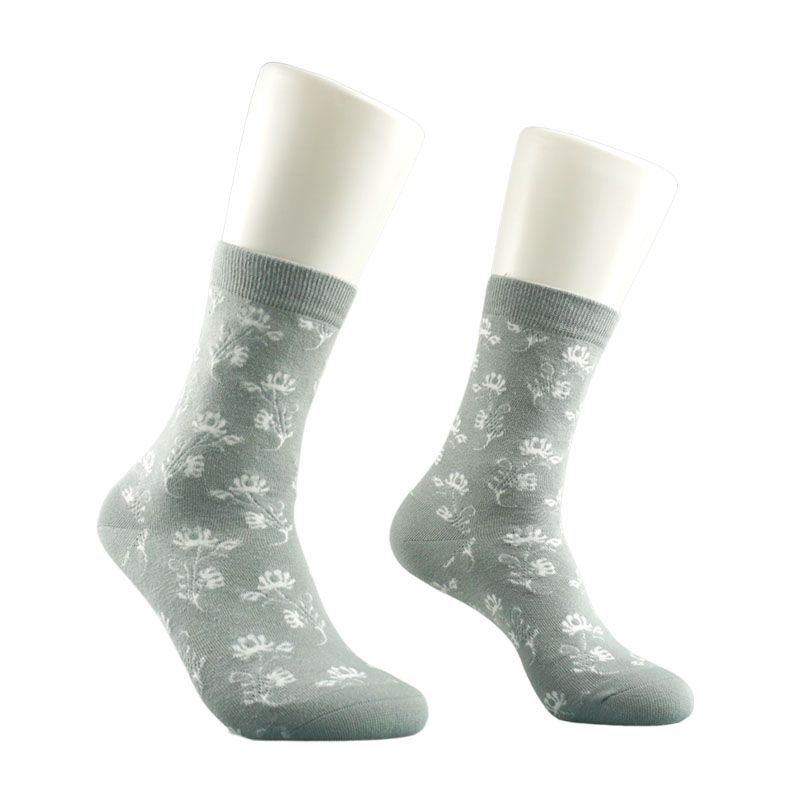
MOQ, lead times and bulk pricing for this category are set out on the custom dress sock range page.
What MOQ Actually Means Minimum order quantity in socks is quoted per design, per colour, per size run. A 300-pair minimum usually means 300 pairs of one design in one colourway, spread across sizes. If you want three colours of the same design, that is three minimums unless your supplier aggregates. Ask how the minimum is calculated before you plan a range — it is the most common source of budget surprises in a first order.
How Pricing Breaks Down Unit price falls at quantity breaks, typically at 300, 1,000, 3,000 and 10,000 pairs. The steepest drop is usually between 300 and 1,000. Beyond the sock itself, expect separate charges for sampling, for jacquard programming if the pattern is new, for custom packaging, and for freight. Ask for a landed cost per pair — everything included — because a low unit price with expensive tooling and freight is worse than a slightly higher all-in number.
Specifications You Must Lock Down Never leave these open on a purchase order: gauge (needle count), yarn composition with percentages, length in centimetres from heel to cuff, size breakdown, pattern artwork with colour references, cuff construction, toe closing method, and packaging specification. Each one is a place where a factory can legitimately substitute something cheaper, and each substitution changes the product. A tech pack with all eight specified is the single best protection you have.
Questions to Ask a Factory How many needles are your dress sock machines? Can you supply a reference for the yarn you intend to use? What is your shade-matching tolerance and do you keep lab dips on file? How do you close the toe? What is your defect rate and how are seconds handled? Can you show a wash-test report? A factory that answers all six fluently is a factory that can scale with you; one that answers vaguely will cost you on the second order.
Protecting Dye Consistency on Reorders Colour drift between orders is the most common complaint in wholesale hosiery. Protect against it by approving a lab dip and keeping a physical reference swatch, by specifying a tolerance in writing, and by asking for a shipment sample from every production run before it ships. For uniform programmes, where a sock has to match across years, buy a slightly larger first run and reorder against the same dye-lot reference.
Sampling and Approval Timeline Budget two to three weeks for sampling, including one round of revisions. Then three to five weeks for production, plus transit. A first wholesale order from artwork to warehouse typically takes ten to fourteen weeks. Plan for it, because every rushed order in this category produces the same two failures: an unapproved shade and a size run nobody checked.
How Are Dress Socks Made? picks up where this article leaves off.
FAQ
Q: Can I mix colours to reach the minimum? A: Sometimes, depending on the factory. Always ask — policies vary widely.
Q: Is it cheaper to use a stock design? A: Yes, and significantly. Custom jacquard programming and sampling are real costs on a first order.
Q: How do I avoid colour variation between orders? A: Keep a signed-off lab dip, specify tolerance in writing, and request a shipment sample every run.
Q: Should I use air or sea freight? A: Sea for planned orders, air only for reorders that are already late. Air freight can double landed cost.
CONCLUSION
Wholesale dress sock buying comes down to knowing your cost levers, locking every specification into a tech pack, and choosing a factory that answers technical questions precisely. Plan a realistic timeline, protect your dye reference, and buy a landed cost rather than a unit cost. Do that and the programme will still be running — and restocking cleanly — three years from now.
When you are ready to produce, Sockmader’s custom dress socks team covers sampling, MOQ and lead times in one place.