Cotton is the most forgiving canvas in hosiery. It takes dye cleanly across a wide gamut, it knits predictably at every gauge from chunky to fine, and it holds both jacquard structure and surface print well. That flexibility is why cotton carries more design variety than any other fibre. The twelve ideas below are grouped by the technique they depend on, because technique determines cost — and knowing that lets you build a range where the expensive pieces earn their place.
Every idea below can be produced through custom cotton socks, including jacquard, printing and retail-ready packaging.
Stripe and Colour Ideas
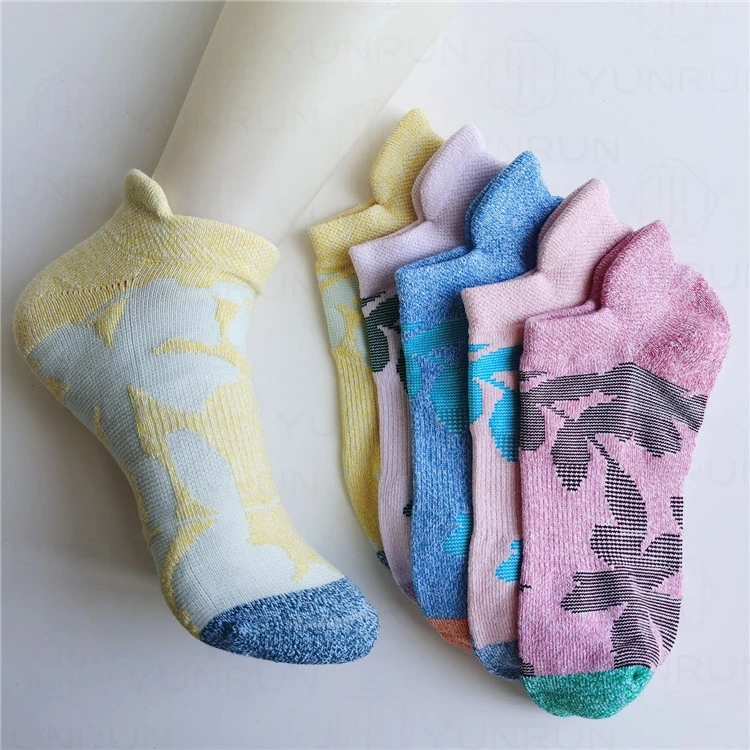
1. Contrast heel and toe. The perennial. Cheap to produce, instantly legible, and it hides wear at the two points that wear out first.
2. Tonal colour blocking. Three shades of one colour across cuff, leg and foot. Sophisticated, and it photographs beautifully in a flat lay.
3. Engineered stripe placement. Stripes that change width up the leg rather than repeating evenly. Costs nothing extra and looks designed.
4. Colour-dipped toe. A single colour on the toe box only, like a dipped candle. Simple, distinctive, and it works in every gauge.
Jacquard and Structure Ideas
5. Small-scale motif repeat.
A tiny star, leaf or animal repeated across the leg. Reads as pattern from a distance and as detail up close.
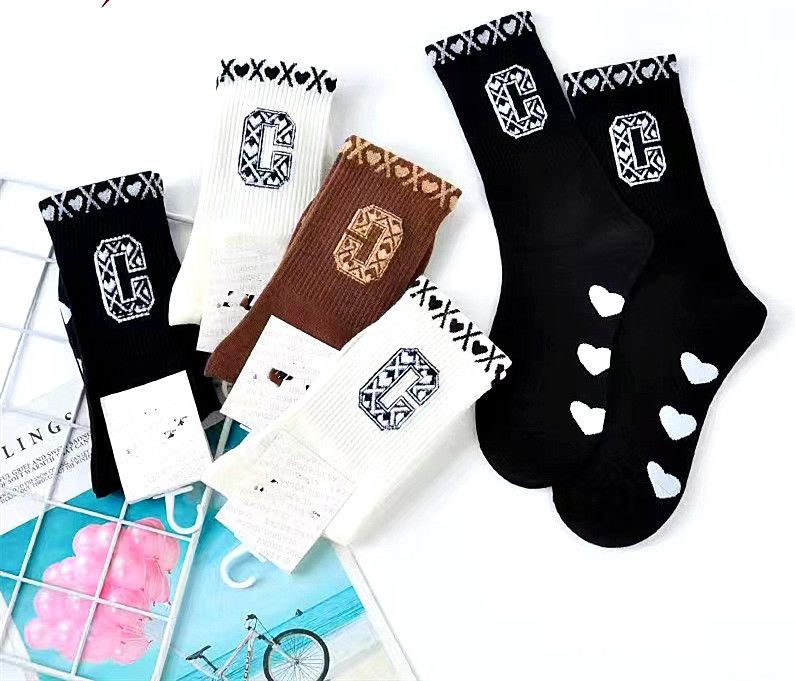
6. Monogram or initials. Knitted into the leg or cuff. The strongest idea for corporate gifting and premium basics.
7. Ribbed turnover cuff. A deep rib folded down. Adds perceived quality and a retro athletic note at no yarn cost.
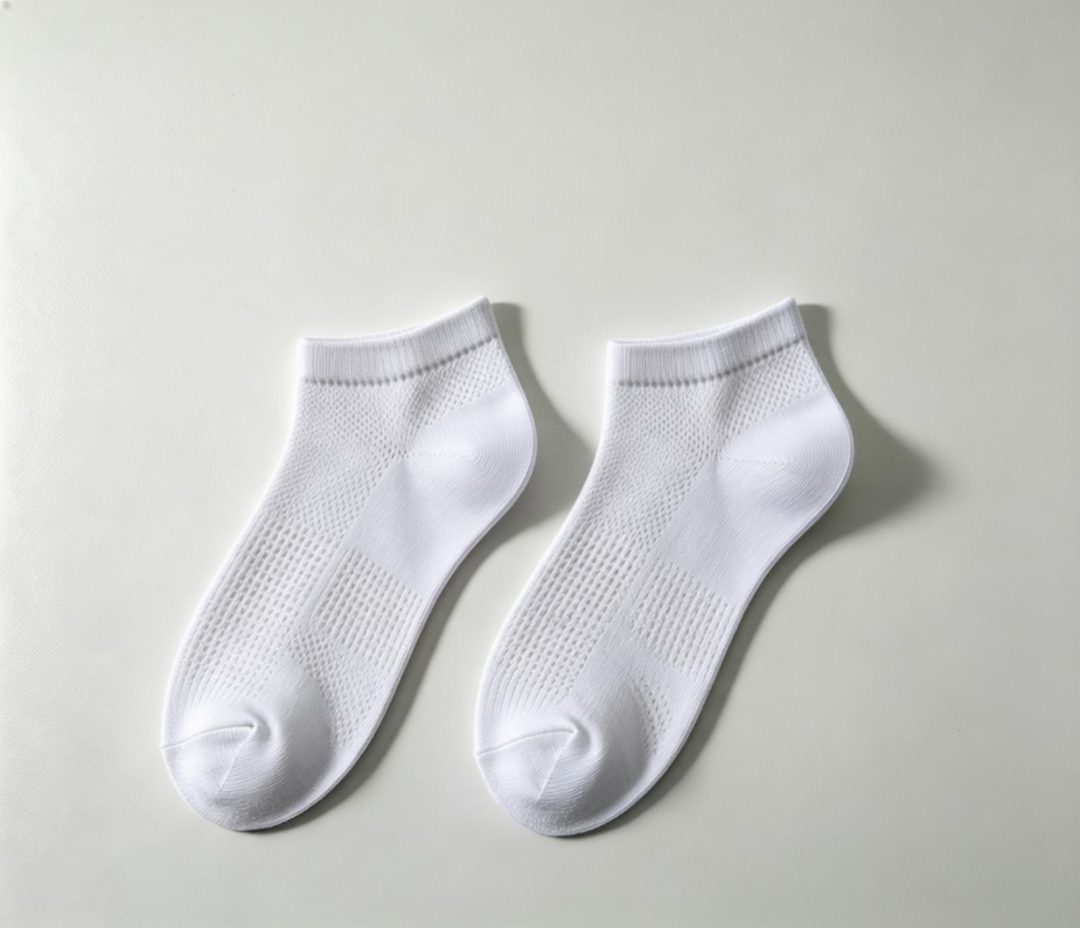
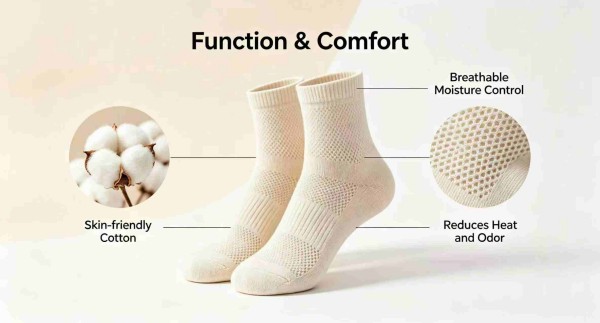
8. Waffle or mesh texture. Structural rather than coloured. Works especially well in white and natural tones.
Print and Surface Ideas
9. All-over photographic print.
Unlimited colour, no float limits. Best for licensed, novelty and statement designs.
10. Sole print. Artwork on the sole only, revealed when the foot lifts. Unexpected and highly shareable on social media.
11. Placement print with a plain leg. One motif positioned at the ankle. Lower print cost than all-over, and more wearable.
12. Reactive-dyed space-dye yarn. Yarn dyed in repeating colour intervals before knitting, so every sock is slightly different. No two pairs identical, which is a genuine selling point.
What Each Technique Costs Stripes and colour changes are the cheapest — they use the machine’s standard capability with multiple yarn feeds. Jacquard costs more, because it needs programmed needle selection and creates floats that must be managed. Print costs least per colour but adds a separate production stage and a minimum quantity for the print setup. Texture effects sit between jacquard and stripes. A sensible first range leans on stripes and colour, uses one jacquard piece as the premium anchor, and adds print only for a genuinely graphic idea.
Building a Coherent Range Twelve ideas is not a range — it is a mood board. Choose four: one stripe, one jacquard, one texture and one print or yarn effect. Run each in three or four colourways built from a single shared palette. That gives a twelve-to-sixteen SKU collection from four designs, which looks deliberate, samples cheaply, and lets you identify the winner before committing to a second production run.
We go deeper on Cotton Socks Trends in a separate guide.
FAQ
Q: What is the cheapest design that still looks custom? A: A contrast heel and toe with a striped cuff. Standard machine capability, and it reads as branded.
Q: Does printing fade on cotton? A: Gradually, yes. Reactive and pigment inks bond well to cotton but soften over dozens of washes.
Q: How many colours can a jacquard cotton sock carry? A: Four to six is comfortable. Beyond that the floats get long and the inside gets messy.
Q: Which idea sells best for gifting? A: Monogrammed or tonal colour-blocked socks in a presentation box.
CONCLUSION
Cotton rewards colour-led design. Build the range on stripes and contrast panels because they are cheap and legible, add one jacquard motif for premium depth, and reserve print for ideas that genuinely need unlimited colour. Four designs in a shared palette will outperform twelve unrelated ones, and it will cost a fraction to sample.
To move from plan to order, send artwork, size range and quantity through Sockmader.
When you are ready to source, the Sockmader custom cotton socks team can quote sampling, MOQ and lead times for your quantity.