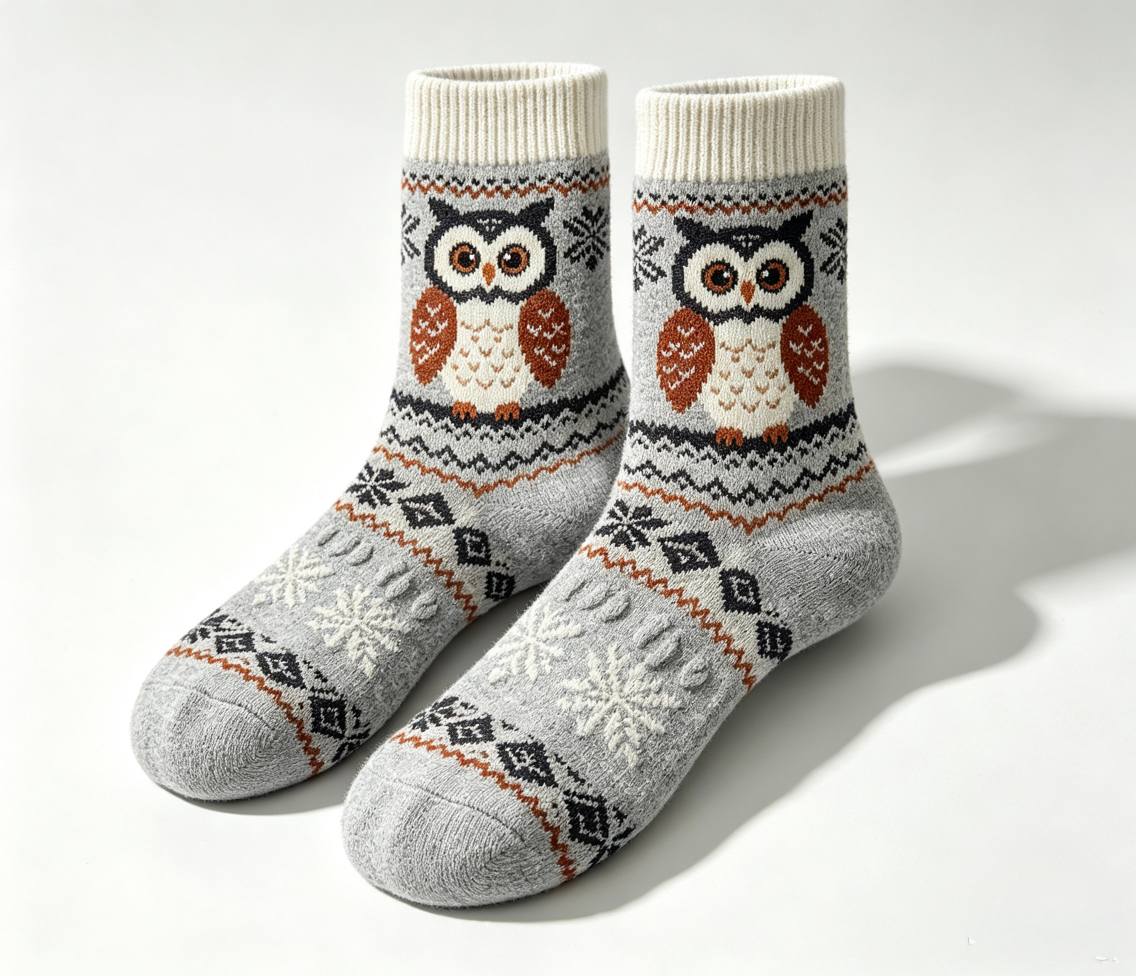
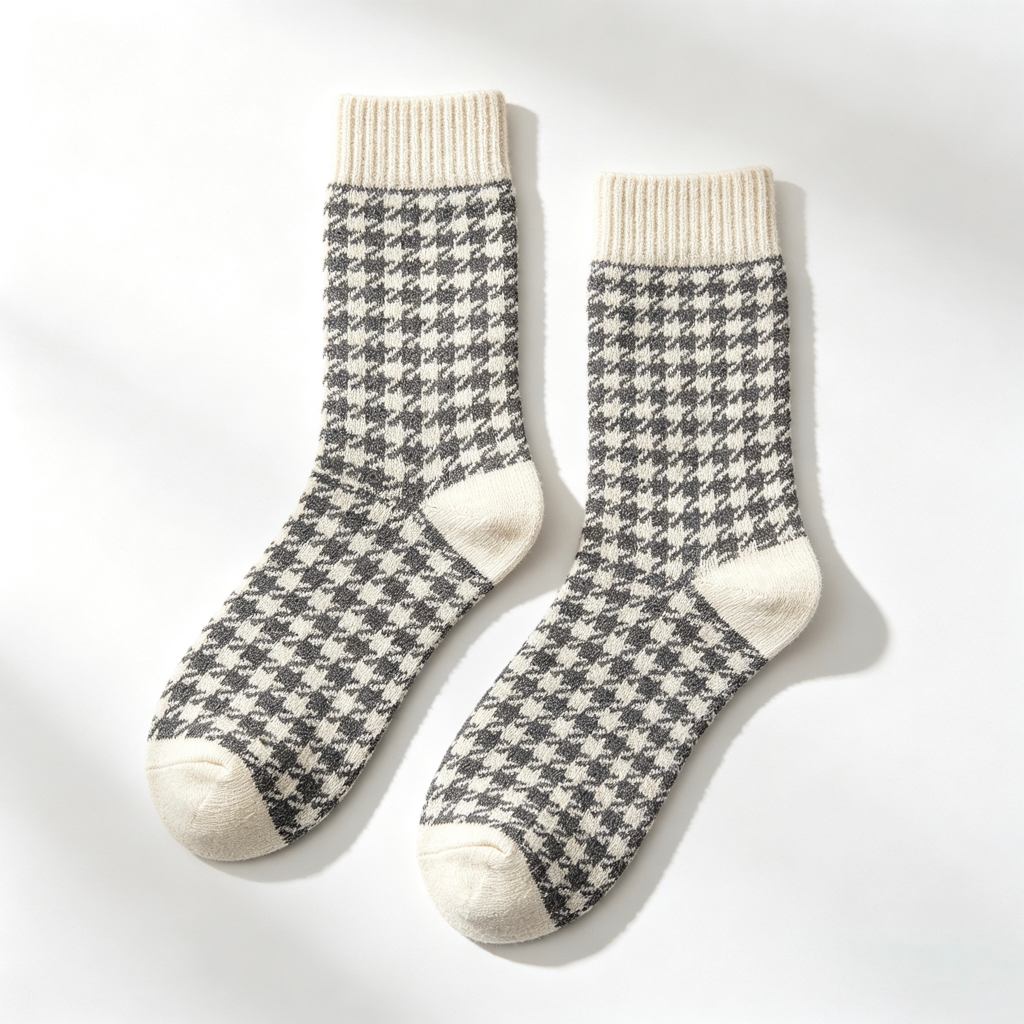
When a brand wants its mark on a sock, the shortlist almost always comes down to two methods: knit the design in, or stitch it on afterwards. Both produce a legitimate product, and the right answer depends less on aesthetics than on three practical questions — how big is the mark, how many pairs are you ordering, and where will the sock be worn.
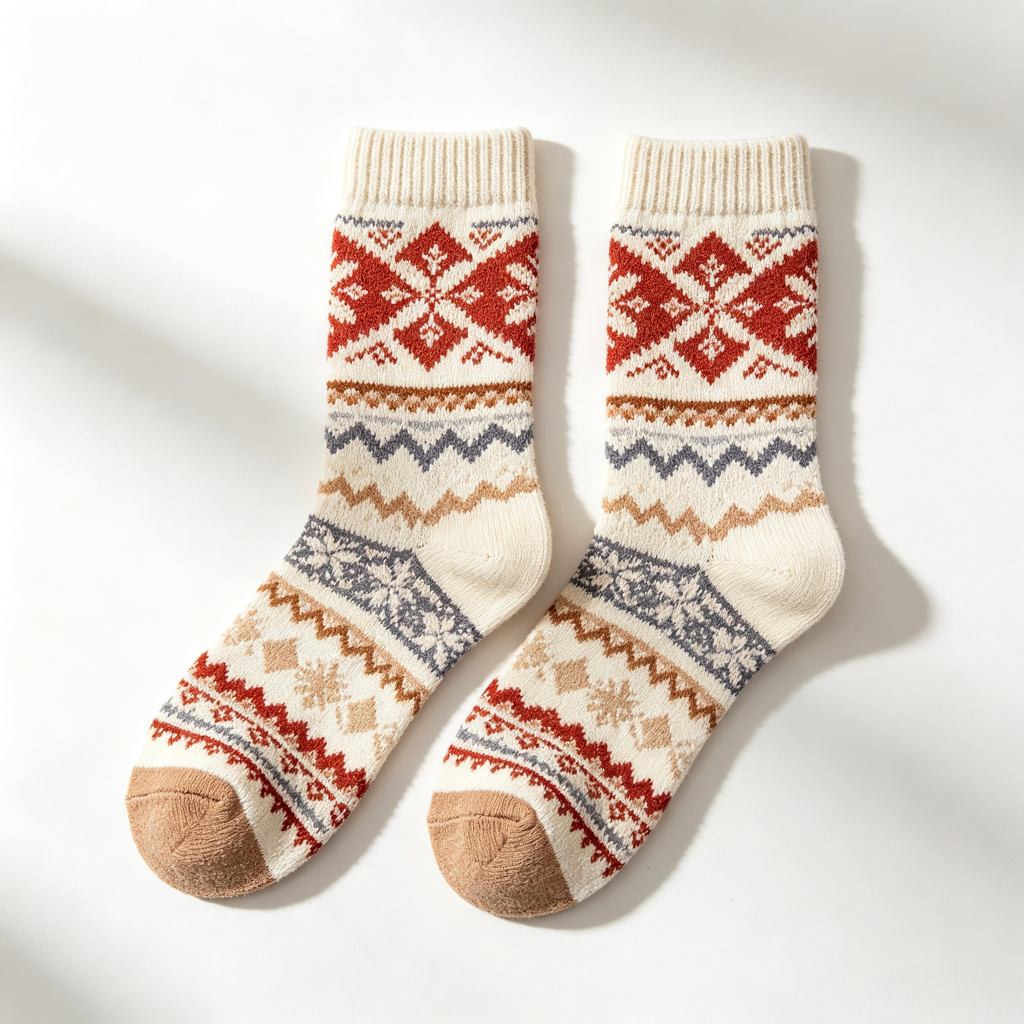
Both options are available through custom knitted pattern socks, and we can sample each one for side-by-side testing.
H2 How Each Method Works
Jacquard selects needles during knitting so that different coloured yarns form the pattern as the fabric is built. There is no post-knitting step, and no material is added to the sock.
Embroidery takes a finished sock, hoops the target area, and stitches thread onto the surface with a needle. It is applied after knitting and it adds a layer of thread to both faces of the fabric unless it is backed.
H2 Durability
Jacquard wins here, and not narrowly. The pattern is structurally part of the sock, so there is nothing to abrade away. Embroidery thread is tougher than most people expect, but a dense satin-stitch logo on a high-friction area — the heel, the ball of the foot, the outside ankle where a boot rubs — will eventually show broken threads.
For work socks, hiking socks and children’s socks, this consideration alone usually settles the question.
H2 Comfort
Embroidery puts thread on the inside of the sock. Quality production applies a soft backing to cover it, but that backing is another layer, and on a lightweight dress sock it can be felt.
Jacquard has floats rather than added bulk. With proper float control the inside of the sock is smooth. This is why jacquard is preferred for socks worn next to skin for long periods, and why embroidery is usually confined to the cuff or the outer ankle where contact is limited.
H2 Detail and Colour
Embroidery can render finer lines than jacquard, because the needle moves freely rather than being constrained to a stitch grid. Very small text and thin outlines are more legible in embroidery.
Jacquard cannot match that fineness, but it handles larger areas better. Covering a whole leg in embroidery would be prohibitively expensive and uncomfortably stiff; covering it in jacquard is routine.
H2 Cost and Minimums
Embroidery has low setup. A design is digitised once and can be applied to any sock, in any quantity. That makes it the clear choice for small runs — fifty branded pairs for an event, or a short-run corporate gift.
Jacquard has higher setup and a higher minimum, but a lower marginal cost. Above roughly a thousand pairs, jacquard usually works out cheaper per unit for the same coverage, and it looks more integrated.
H2 Best Use Cases
Choose embroidery when: the run is under about 300 pairs, the mark is small and detailed, you want one logo applied across several different sock styles, or you need a very fast turnaround on stock socks.
Choose jacquard when: the run is 500 pairs or more, the pattern covers a larger area or wraps the leg, the sock will see heavy abrasion, comfort against skin is a stated benefit, or you expect to reorder the same design for years.
H2 A Third Option Worth Knowing
For small marks at high volumes, there is a middle path: knit the sock plain and apply a knitted or woven label to the cuff. It is cheap, it is durable, and it keeps the leg completely free of any added layer. It is common in uniform programmes and it is often overlooked.
H2 What We Recommend
If you are launching a branded sock line, start with jacquard for the hero design and embroidery only where you genuinely need fine detail at low volume. The two are complementary, and a range that uses both for the right reasons looks considered rather than inconsistent.
How Are Novelty Socks Made? picks up where this article leaves off.
FAQ
Q: Can embroidery be combined with a jacquard pattern? A: Yes, but it is usually unnecessary. If you already have a knitted pattern, adding embroidery on top tends to look overworked.
Q: Does embroidery shrink in the wash? A: Quality polyester embroidery thread is stable. Cotton thread can shrink slightly and pucker the surrounding knit.
Q: Which looks more premium? A: On a retail shelf, jacquard generally reads as more premium because it looks engineered rather than applied. Embroidery reads well on corporate and team merchandise.
CONCLUSION
Embroidery is a finishing process; jacquard is a construction. For small runs and fine detail, embroider. For volume, coverage and longevity, knit it in — and if you only need a small mark on a plain sock, consider a cuff label before either.
Ready to price this out? Start with a sample from Sockmader’s custom jacquard socks team, or send your artwork and target quantity for a quote.