Novelty socks look like a low-stakes category. They are cheap, they are fun, and they sit by the till. Behind that impression is one of the more reliably profitable lines a sock brand can carry, and the reason has less to do with humour than with how the product behaves commercially.
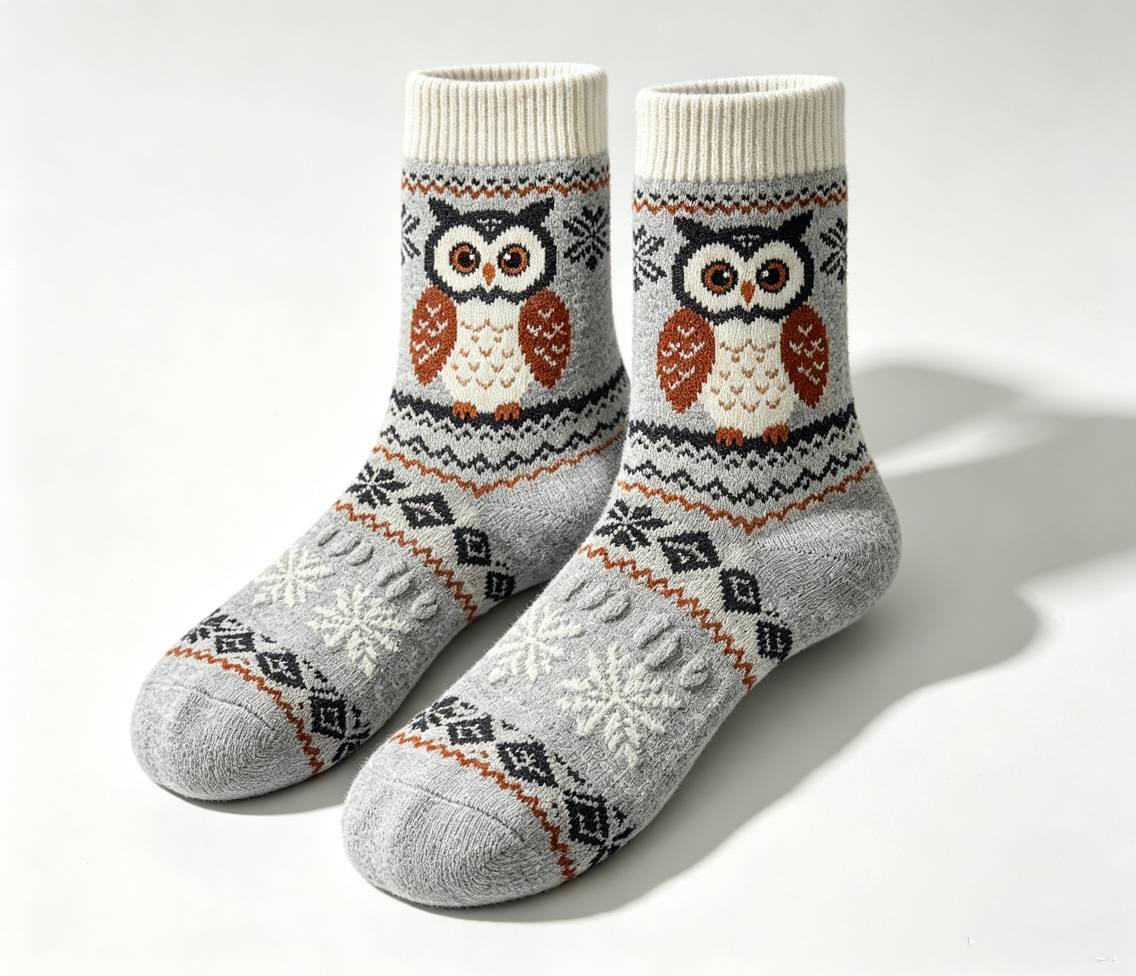
You get these same benefits through custom jacquard socks, with yarn and construction tuned to your target price point.
H2 They Are Bought as Gifts, Not as Replacements
A plain sock purchase is a replacement purchase — the customer buys because the old pair has a hole. That is a low-involvement decision driven by need, and it is highly price sensitive.
A novelty sock purchase is a gift purchase, even when the customer is buying for themselves. The buying trigger is delight rather than depletion, and delight purchases carry much healthier margins. This is the single most important difference in the category, and it is why novelty socks sustain a price point that a plain sock of identical construction cannot.
H2 Knitted Motifs Survive the Wash Cycle
The cheapest novelty socks on the market are printed, and the most common complaint in their reviews is the same: the design cracked after three washes. The customer did not return them, but they did not reorder either.
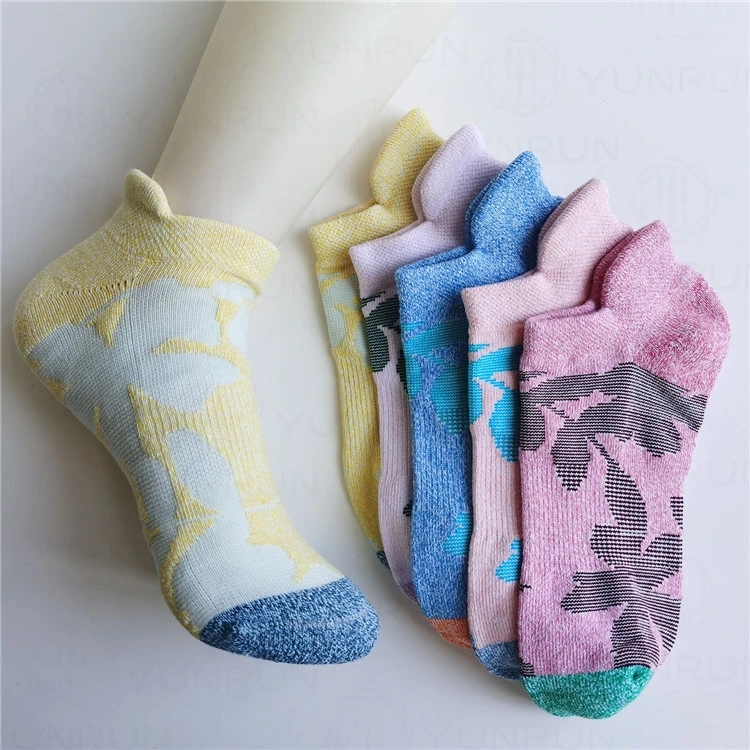
Knitting the motif in removes that failure mode entirely. The pattern cannot crack, peel or craze, because there is no layer to lose. For a retailer building a house brand, this is the difference between a category that generates repeat purchases and one that generates one-star reviews.
H2 High Margin Per Square Metre
Novelty socks are small, light and do not need to be tried on. They work in a display bin, on a till-side hook, or in a gift box at the front of the shop. The sales value generated per unit of shelf or floor space is high relative to almost anything else in an accessories range.
Online, they photograph well in flat lays, they are cheap to ship, and they are easy to bundle — three pairs in a gift box is a common and very effective construction.
H2 They Create a Collectable Behaviour
Customers who buy one novelty pair tend to buy more. The category has a collector dynamic: a customer who likes the donut pair is a strong prospect for the pizza pair next season. For a brand, this means a novelty range is one of the few sock lines where the second purchase is genuinely likely.
This is why we recommend designing novelty motifs as a family — one visual language, consistent colour ground, interchangeable subject — rather than as unrelated one-offs.
H2 Corporate and Promotional Demand Is Steady
Beyond retail, novelty socks have become a standard promotional item. Companies order branded novelty socks for onboarding kits, conference giveaways and client gifts, because a wearable item with a sense of humour is kept far longer than a stress ball.
For a manufacturer, this demand is unusually stable, and it is one reason novelty capacity is worth protecting even in a slow retail season.
H2 Seasonal Peaks You Can Plan Around
Novelty demand has predictable peaks: November and December for gifting, February for novelty and joke gifts, and May to June for graduation and Father’s Day. Unlike fashion categories, these peaks arrive on schedule every year, which makes inventory planning unusually reliable.
The operational implication is simple: have the Christmas designs sampled and in production by September, and treat the festive range as a fixed annual programme rather than a reactive one.
H2 What Can Go Wrong
Two failure modes dominate. The first is over-complex artwork that does not knit cleanly, which produces a muddy motif at small scale. The second is a colourway that depends on a discontinued yarn, which makes the reorder impossible and kills the collectable dynamic at the second purchase.
Both are avoided by sampling properly and specifying stock yarns.
We go deeper on How Are Novelty Socks Made? in a separate guide.
FAQ
Q: Are novelty socks a good first category for a new brand? A: Yes. Minimums are manageable, the product is forgiving of size errors, and the gift dynamic supports margin that a plain sock cannot.
Q: Should novelty socks be printed or knitted? A: Knitted, wherever the design allows. Print is appropriate for photographic artwork, but knitted motifs last longer and justify a higher price.
Q: How many designs should a novelty range carry? A: Eight to twelve for a credible retail range, refreshed two or three times a year rather than all at once.
CONCLUSION
Novelty socks work because they are bought for delight rather than need, and delight supports margin, gifting and repeat purchase. Knit the motif rather than printing it, build the designs as a family, and the category becomes one of the most reliable lines in the range.
To move from plan to order, send artwork, size range and quantity through Sockmader.
When you are ready to source, the Sockmader custom jacquard socks team can quote sampling, MOQ and lead times for your quantity.