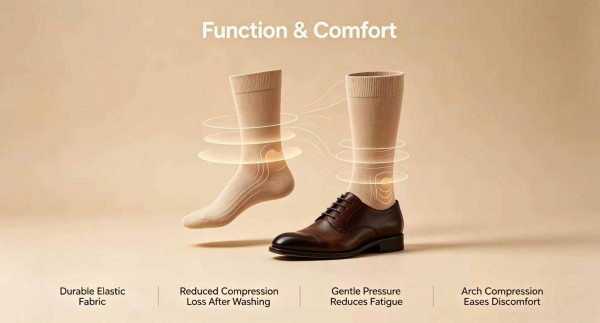
Compression socks are in the middle of a category transformation. What was a pharmacy product a decade ago has become a lifestyle accessory worn by athletes, travelers, nurses and office workers — and the growth curve is still climbing as new segments discover graduated pressure. From the supply side, where we see order books and design briefs before they hit shelves, here are the trends defining what happens next.
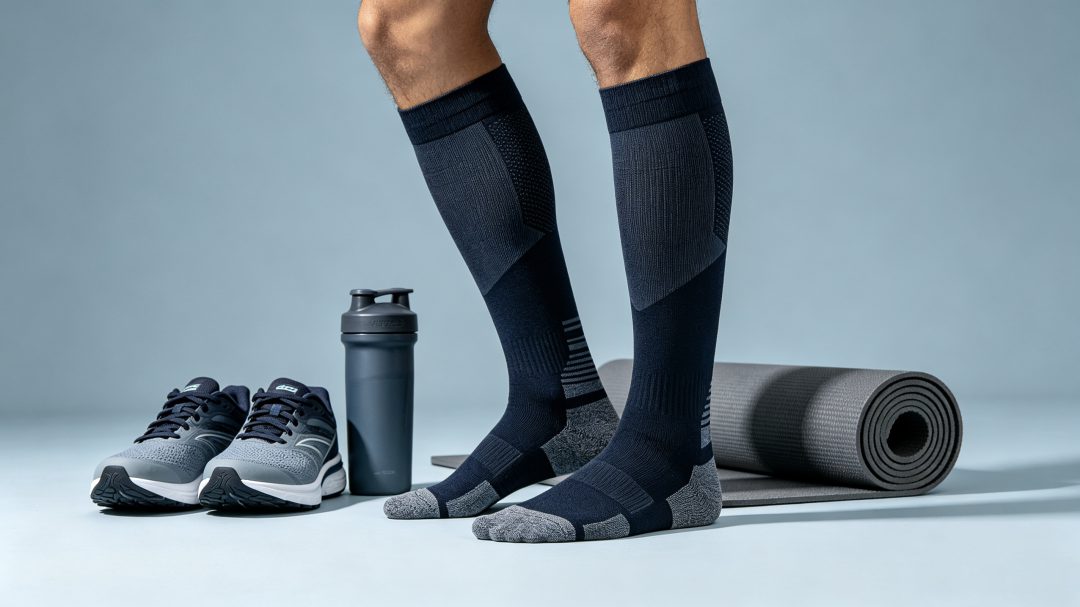
These directions are already running through custom compression socks, and new styles can be sampled in roughly two weeks.
Trend 1: Fashion Compression Is the Growth Engine
The biggest structural shift: compression socks have become a fashion category. Gradient colorways, bold patterns, ribbed textures and seasonal drops now dominate new product development briefs — the aesthetic expectations of athleisure applied to pressure garments. The implication for brands is significant: design capability (not just engineering) now determines who wins shelf space and social attention.
Trend 2: Sports Recovery Goes Mainstream
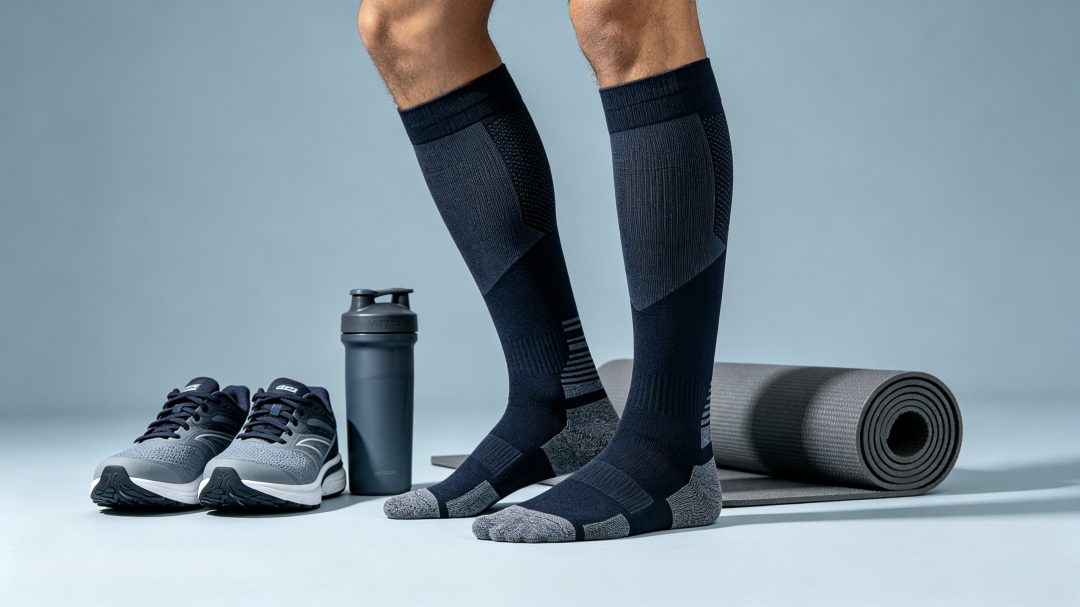
Recovery culture has moved from elite athletics to everyday fitness. Compression socks are now standard kit for marathon training blocks, trail running, CrossFit boxes and gym-goers who learned about circulation recovery from fitness influencers. This segment demands performance fibers, sport styling, and credible recovery messaging — and it buys multiple pairs, replacing worn garments on a rolling cycle.
Trend 3: Sustainability Becomes Table Stakes
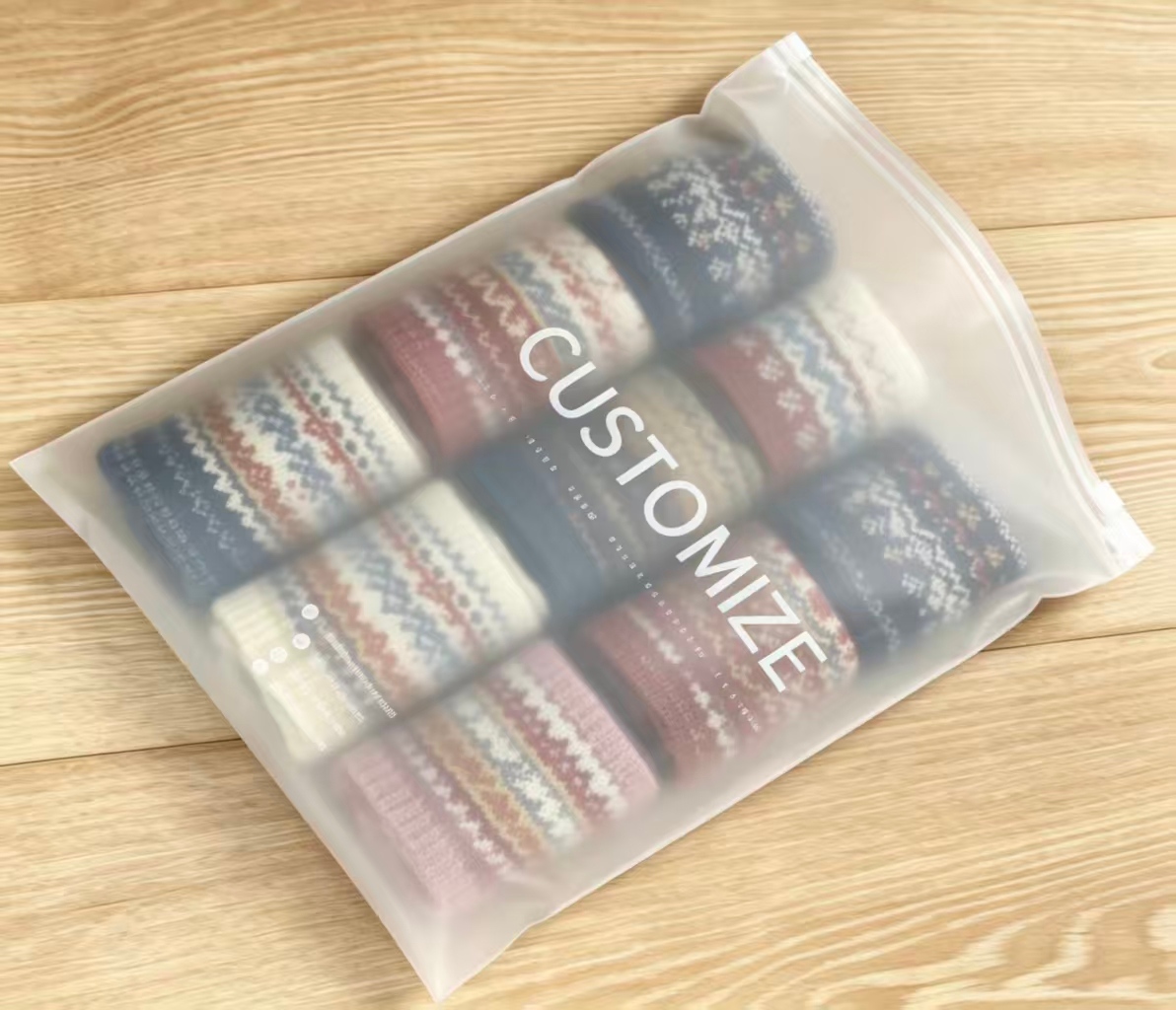
GRS-certified recycled polyester compression socks, plastic-free packaging, and OEKO-TEX documentation have shifted from differentiators to listing requirements at major retailers. The next wave goes further: carbon-footprint transparency and recycled elastane development. Brands without a materials story are already losing placements.
Trend 4: Inclusive Sizing Expands the Market
Extended size ranges (plus sizes, wide calves, tall versions) are among the highest-demand, lowest-supply products in the category. Historically served poorly by circumference-blind sizing, these customers are highly loyal to brands that finally fit them. Expect extended sizing to move from niche opportunity to standard range architecture.
Trend 5: Channel Fragmentation and D2C Loyalty
The category now sells everywhere: pharmacies (medical credibility), sports retail (recovery positioning), airports (travel impulse), subscription boxes (replenishment economics — compression socks genuinely wear out), and D2C brands building communities around niches like nursing, running and travel. The winners in each channel are brands purpose-built for it, not generalists spreading one catalog thin.
Trend 6: Compression Sleeves and Hybrid Formats
Calf sleeves (footless compression) are growing as a complement to socks — popular with runners who prefer their own socks, and with athletes managing shin and calf issues. Ankle-length compression socks target the sneaker-wearing office and travel segments. Format diversification lets brands serve usage occasions the classic knee-high never addressed.
Trend 7: Regulation Creep — Compliance Awareness
As wellness claims multiply, regulators are paying more attention to pressure claims and medical-adjacent marketing. Brands that document their pressure levels with test reports and keep claims conservative are building a durable advantage; those marketing “medical-grade” benefits without registration are accumulating risk.
We go deeper on Compression Socks vs Regular Socks in a separate guide.
FAQ
Q: Is the compression socks market still growing? A: Yes — driven by aging populations, sports recovery culture, travel recovery and workplace wellness; all major segments are expanding simultaneously.
Q: What is the biggest trend for a new brand to ride? A: Fashion-forward design at wellness-grade pressure (15–20 mmHg) for a specific niche community — the combination with the strongest current momentum.
Q: Are sustainable compression socks as effective as conventional ones? A: Yes — recycled polyester blends deliver comparable pressure profiles and durability when produced by quality factories; demand test reports as you would for any program.
CONCLUSION
The compression sock category is scaling on fashion credibility, sports recovery culture, inclusive sizing and sustainability — while regulation quietly raises the bar for honest claims. Brands that combine genuine pressure engineering with lifestyle design and a defined community are positioned to capture the category’s next growth phase.
Ready to price this out? Start with a sample from Sockmader, or send your artwork and target quantity for a quote.
If you are planning your own line, our custom compression socks program covers sampling, MOQ and lead times in one place.