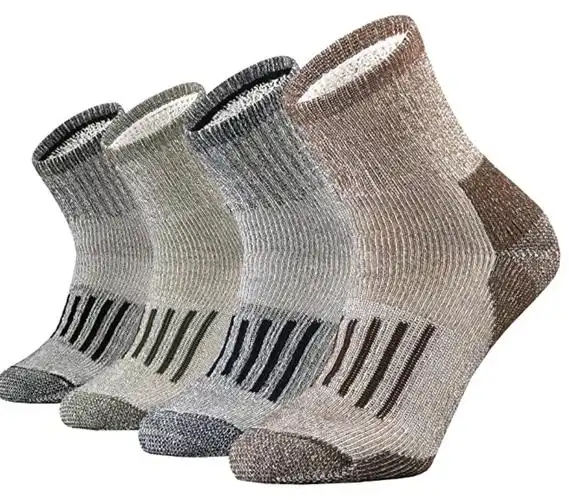
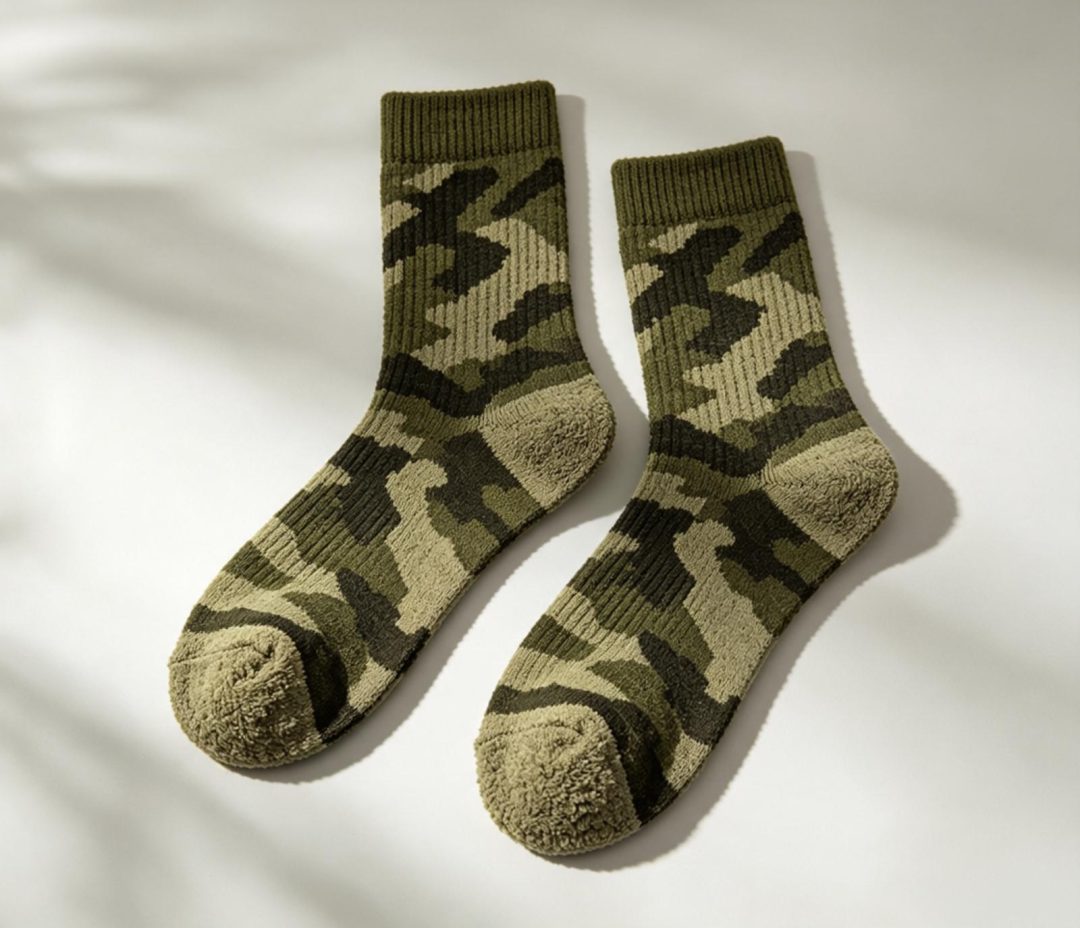
A football sock is prime real estate for team identity — it is the most photographed garment after the jersey. Good design is not just “our colors”; it is stripe placement, number treatment and contrast that read clearly on a pitch from the stands. Here are practical design ideas we use with clubs, drawn from hundreds of bulk team runs. The goal is a sock that looks intentional on the field and in the photo gallery, not a generic colored tube with a printed number that cracks after a month.
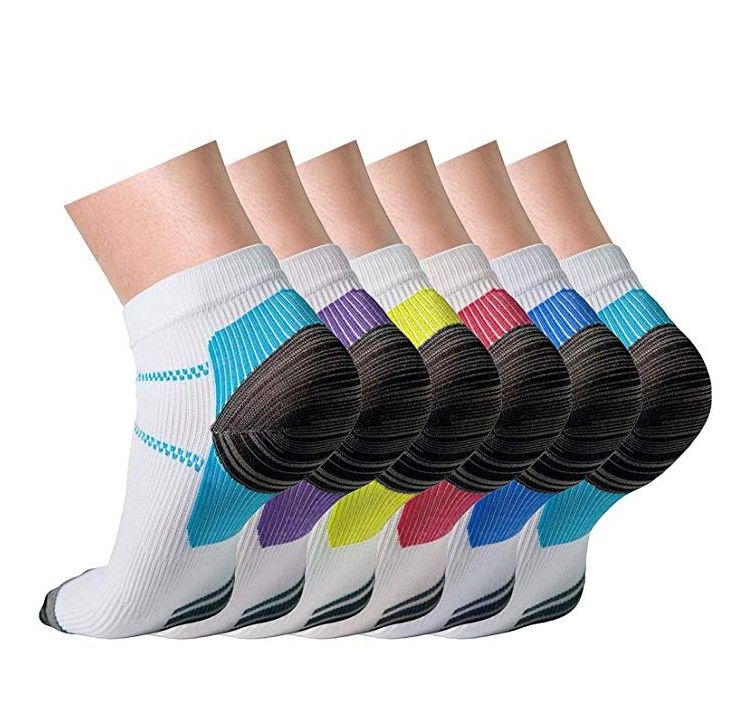
Every idea below can be produced through custom sports socks, including jacquard, printing and retail-ready packaging.
Stripe Layouts That Work – Single cuff stripe: clean, classic, lowest MOQ. – Double stripe (cuff + mid-calf): more visual weight, common in European clubs. – Full team band: a wide knitted band at the calf in a secondary color — bold but needs higher MOQ. Stripes are knitted, so they never fade; plan the number of color fingers (usually two to three) before the knit file is locked. A double stripe in team colors is the most giftable and recognizable look for a club.
Player Numbers Two routes: a jacquard number knitted into the calf band (durable, professional, MOQ 500+) or a woven label (cheap, flexible for roster changes). For stable senior squads, knit the numbers; for youth, use labels. We advise clubs to decide based on roster turnover, not just budget — a knitted number on a squad that changes every season becomes obsolete fast.
Contrast and Readability A logo or number in a color too close to the sock base vanishes on TV and in photos. We run a contrast check and recommend a light number on a dark band or vice versa. Avoid three similar mid-tones that blur at distance. The sock is seen from the stands and on a phone screen, so contrast trumps subtlety.
Color Strategy Keep a neutral base (white or black) and let the bands carry color — this lets one factory run serve home and away with a band swap. Limit to two team colors plus neutral to control dye-lot drift. A third accent is fine as a thin stripe but not as a large area that complicates shade locking.
MOQ and Sampling Custom-designed football socks: MOQ ~300 pairs/colorway, 500+ if numbers are knitted. Always sample the knit file on one pair before the full run — stripe registration and number placement are the two things that go wrong, and both are invisible in a digital mock. We supply a physical sample, not just a render.
Sampling and Approval Workflow A clean design process runs four steps: (1) digital mock in team colors, (2) one physical knitted sample for stripe registration and number placement, (3) a worn-and-washed test on the sample to confirm stay-up and shade, (4) lock the knit file. Budget 7–10 days for steps 1–2 and don’t skip step 3 — a sock that looks right on a form can still slide or fade in use. Only after the file is locked do we cut the bulk run. This workflow is why our football sock re-orders rarely need a redesign; the first sample settles every detail.
We go deeper on Soccer Socks Benefits in a separate guide.
FAQ
Q: Can we match the jersey exactly? A: Yes via Pantone dye, but commit to 500+ pairs per color to hold the shade across reorders and across the jersey and sock made in different factories.
Q: Knit numbers or labels? A: Knit for stable squads; labels for youth and frequent changes.
Q: How many design revisions are typical? A: Two to three before the knit file locks; we supply a digital mock plus a physical sample so the band and number read right.
CONCLUSION
Team identity on a sock comes from stripe discipline, readable numbers and controlled contrast — not from cramming in every color. Design with the knit file in mind and the result looks professional from the stands, and the club re-orders with confidence.
Ready to price this out? Start with a sample from Sockmader, or send your artwork and target quantity for a quote.
If you are planning your own line, our custom sports socks program covers sampling, MOQ and lead times in one place.