Buyers searching for custom fuzzy socks manufacturer usually want three things settled before they write to anyone: the specification, the minimum and the calendar. Vetting comes down to a short list of questions, and asking them in the first email separates the factories from the trading desks in a single round.
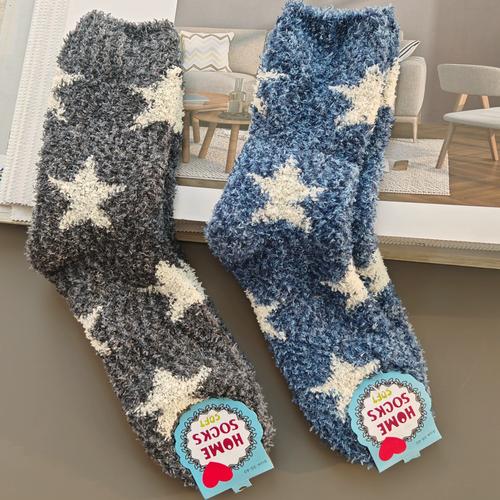
If you landed here by searching custom fuzzy socks, you are probably building a shortlist or checking whether a quote already received makes sense. Either way the reference points are the same – MOQ from 50 pairs, 3-7 days to sample, 5-25 days to produce – because buyers who are shortlisting production partners rather than shopping for a single pair all run into the same four cost lines.
Note those down with pile length, shedding control and sole treatment before you send anything out.
On this page:
- The questions that actually predict how a fuzzy socks supplier will behave
- Sizing the first order
- QC: the checks to ask for before the shipment leaves
- More questions worth asking
Search variants worth knowing about: fuzzy socks wholesale; fuzzy socks manufacturer; bulk fuzzy socks – they cover the same ground from a different starting point.
The questions that actually predict how a fuzzy socks supplier will behave
Send these in the first two emails. The value is not the answer itself but how quickly and specifically it comes back.
1. How many pairs of this style have you made in the last twelve months? Volume in your exact category is the most predictive answer available.
2. What is your average sample-to-bulk approval time? Speed here tells you how organised the development process is.
3. Can you send a size set rather than a single sample? One sample hides grading problems; a size set exposes them.
4. Who buys your yarn, and can you evidence it? Yarn substitution is a common silent cost-cutting move.
5. Do you wash and board in-house? Outsourced finishing adds both time and variance.
6. What is your packing defect rate? Wrong counts and missing barcodes cause more retail chargebacks than sock defects do.
7. How do you deal with a claim after delivery? Ask for an example rather than a policy statement.
8. Are your social compliance reports current? Expired audit reports are extremely common and easy to check.
9. Can you quote both sea and air options? A supplier who has not thought about your freight has not thought about your date.
10. What would stop you hitting my delivery date? The honest answer to this question is worth more than any brochure.
Send the list as a numbered email rather than over chat. Written answers are the only ones you can realistically hold someone to later. Start from custom socks for the category baseline.
Sizing the first order
There is no advantage in ordering more than you can sell through, and no advantage in ordering less than the factory can schedule cleanly. The useful question is what the first order is for.
| Purpose | Sensible first order | Why |
|---|---|---|
| Quality and communication test | close to the minimum | you are buying information, not margin |
| Live launch with a known sell-through | one to three months of cover | avoids a forced reorder mid-season |
| Seasonal or gift programme | full season cover in one run | colours and yarn lots will not match later |
The standard minimum is 50 pairs per design. Ask separately for the minimum per colourway and per size, because those are the numbers that actually shape the order, and a supplier who answers with a single figure is usually quoting a stock item.
Seasonal and highly constructed styles carry a higher minimum for a simple reason: the machine spends longer being set up than it does knitting. Terms and sampling rules are set out on sock packaging options.
QC: the checks to ask for before the shipment leaves
AQL 2.5 is the common default for apparel, and many European and US buyers additionally require zero tolerance for critical defects. AQL 4.0 suits promotional goods, and AQL 1.0 is used for high-value or medical channels. Then the product-specific checks:
| Check | Method |
|---|---|
| Grip dot adhesion | Scratch test and wash test. |
| Loft after washing | Whether the pile mats down. |
| Shedding rate | Collect and weigh the fluff after washing. |
| Pile evenness | Inspect against light. |
Agree in writing what happens to rejected goods: rework, replacement or credit. Without that clause, an inspection report is just a document. Process and test references: sock sizing guide.
More questions worth asking
The questions that actually predict how a fuzzy socks supplier will behave
Send these in the first two emails. The value is not the answer itself but how quickly and specifically it comes back.
1. How many pairs of this style have you made in the last twelve months? Volume in your exact category is the most predictive answer available.
2. What is your average sample-to-bulk approval time? Speed here tells you how organised the development process is.
3. Can you send a size set rather than a single sample? One sample hides grading problems; a size set exposes them.
4. Who buys your yarn, and can you evidence it? Yarn substitution is a common silent cost-cutting move.
5. Do you wash and board in-house? Outsourced finishing adds both time and variance.
6. What is your packing defect rate? Wrong counts and missing barcodes cause more retail chargebacks than sock defects do.
7. How do you deal with a claim after delivery? Ask for an example rather than a policy statement.
8. Are your social compliance reports current? Expired audit reports are extremely common and easy to check.
9. Can you quote both sea and air options? A supplier who has not thought about your freight has not thought about your date.
10. What would stop you hitting my delivery date? The honest answer to this question is worth more than any brochure.
Send the list as a numbered email rather than over chat. Written answers are the only ones you can realistically hold someone to later. Start from custom socks for the category baseline.
Where this decision actually sits in the buying process
Most programmes move through the same four gates, and each one has its own failure mode.
| Gate | The decision | What usually goes wrong |
|---|---|---|
| Concept | Is fuzzy socks right for the range at all | Buyers commit before checking whether the channel wants it |
| Specification | Writing down what is actually being made | Vague briefs turn into repeated sample rounds |
| Supplier | Choosing who makes it | Comparison without a written spec is meaningless |
| Commitment | Quantities, dates, payment | Freight and lead time discover the date has already passed |
Work out which gate you are actually at before asking for anything else. Most wasted conversations happen because a buyer asks a commitment-stage question while still at the specification gate. Commercial terms start from sock packaging options.
The numbers to put in your enquiry
Copy this block into your first email. It is the difference between a real quote and a placeholder.
| Line | Your value | Why the factory needs it |
|---|---|---|
| Yarn composition | e.g. Polyester microfibre, coral or sherpa fleece | Sets the largest single cost line |
| Gauge | 84N-108N coarse gauge with a brushing finish | Determines knitting time and machine availability |
| Sizes needed | foot length in cm plus quantities | Sizing drives grading and waste |
| Artwork route | jacquard, print or embroidery | Each route carries a different setup minimum |
| Quantity per design | including per colour | Sets where you land on the price ladder |
| Target in-stock date | a real calendar date | Lets the factory quote honestly or decline |
Two lines are most often left blank, and they are the ones that cause the most trouble: the per-colour quantity and the real in-stock date. Without the first, MOQ is quoted per design and your order may not qualify; without the second, nobody can tell you the truth about capacity. Reference route: custom fuzzy socks.
FAQ
What is the minimum order?
50 pairs per design; gift boxes usually start at 500 sets.
How long is sampling?
3-7 days, plus a few days for a shedding test.
Do fuzzy socks shed?
Proper brushing, shearing and pre-washing keeps shedding acceptable. Cheap goods without the pre-wash step shed badly.
What is the fastest way to get an accurate quote?
Send a specification sheet — yarn composition, needle count, size set, construction, artwork route, quantity and packing. A quote built from that is usually within a few percent of final; a quote built from a photo is not.
To place it in context, compare it against custom knee-high socks.
Where to go from here
Ready to move? Put the spec sheet together first — yarn, needle count, sizes, construction, artwork, quantity, packing. Then custom fuzzy socks and custom socks will get you a number you can plan against.