Heated socks are where hosiery crosses into consumer electronics. A knit garment must integrate heating elements, power delivery, controls and washability — a combination that makes them the most complex product any sock factory can produce. For brands eyeing the winter sports, hunting, and cold-workwear markets, understanding how heated socks are made is the difference between a premium tech product and a safety liability.
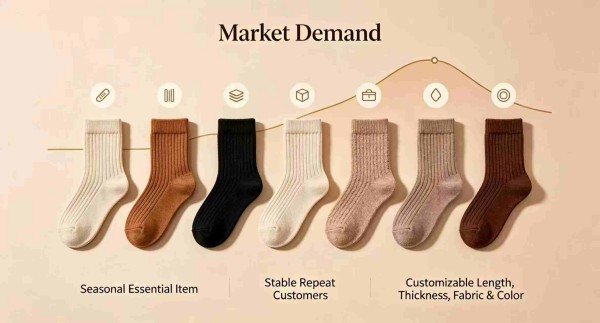
You will see every step below in custom thermal sock range, where sampling runs before bulk production and MOQ starts at 100 pairs per design.
The Heating System
Modern heated socks use carbon fiber or stainless steel fiber heating elements woven or laminated into the fabric — typically as flexible heating zones across the toe box and sole, where cold bites hardest. The elements connect (via internal wiring channeled through the knit) to a power system: compact rechargeable lithium batteries mounted in pockets at the cuff, usually 3.7V–7.4V units delivering 2–8 hours of heat per charge depending on setting. Simple controllers — on-sock buttons or remote/app control on premium models — manage heat levels.
Integration Manufacturing
Producing heated socks combines two supply chains: textile knitting and electronics assembly. The sock body is knitted first (usually a durable polyamide blend with cushioned zones), then heating elements are integrated — laminated onto zones or routed through knitted channels with connection points exiting at the cuff. Battery pockets are sewn or knitted in, wiring is strain-relieved at every flex point (the inside of a boot is a brutal environment for cables), and the system is tested before and after sock assembly. Factories producing these at scale operate electronics test benches alongside their finishing lines.
The Washability Problem
The core engineering challenge: socks must be washable, but electronics and water are natural enemies. Solutions include removable battery/controller units (the standard — electronics detach before washing), waterproof-sealed element zones with IP-rated connections, and low-voltage designs safe even when damp. Washing instructions are strict on quality products (machine washable only with battery removed, element-safe detergents, air dry). Brands must communicate care instructions aggressively — most heated sock warranty claims trace to improper washing.
Safety Standards
Because heated socks mount batteries and heating elements against skin, safety certification is non-negotiable: battery UN38.3 transport testing and CE/UL certification, temperature-limiting controls preventing hot spots (skin-contact products must fail safe, capping element temperature below burn thresholds), and protected circuitry against short-circuit and overcharge. Reputable factories supply full certification documentation per SKU — buyers should treat any reluctance here as disqualifying.
Performance and Comfort Engineering
Beyond electronics, heated socks must still be good socks: wicking liners to manage sweat (damp skin against heat elements is both uncomfortable and inefficient), cushioned soles for boot wear, and ergonomic fit keeping elements flat against the foot — bunched heating elements create both discomfort and hot spots. Battery weight at the cuff requires balanced placement so socks don’t sag. The best products feel like premium thermal socks that happen to heat.
Market Segments
Heated socks serve defined, willing-to-pay segments: winter sports (skiing, snowboarding, ice fishing), outdoor sports in extreme cold (hunting, hiking), cold-climate work (construction, logistics, agriculture), and medical-adjacent circulation support (Raynaud’s sufferers are a passionate niche). Price points run high — $40 to $200 — reflecting the electronic BOM cost and the category’s positioning as technical gear.
Thermal Socks vs Wool Socks vs Fuzzy Socks picks up where this article leaves off.
FAQ
Q: Can you wash heated socks?
A: Yes — with batteries and controllers removed (the standard design). Element zones are sealed; follow care instructions carefully, since improper washing causes most failures.
Q: How long do heated sock batteries last?
A: Typically 2–8 hours per charge depending on heat setting and ambient temperature; spare batteries double the runtime.
Q: Are heated socks safe to wear against skin?
A: Certified products are — they cap element temperatures below burn thresholds and use low-voltage systems. Look for CE/UL certification and battery UN38.3 documentation.
CONCLUSION
Heated socks are genuine wearables: carbon heating elements, sealed electronics, certified batteries and fail-safe controls integrated into hosiery construction. The category rewards factories with real electronics discipline and brands that communicate care instructions — and it punishes corner-cutting mercilessly. Done right, it is winter’s most appreciated premium product.
When you are ready to produce, Sockmader’s custom thermal socks team covers sampling, MOQ and lead times in one place.