“Warm sock” is achieved three different ways, and the three types — thermal, wool and fuzzy — are not interchangeable. For a cold-weather line, knowing the difference prevents stocking the wrong product for the use and fielding the returns that follow. This comparison breaks down how each creates warmth, which jobs each suits, and how to build a winter range that covers all three without confusing the buyer at the shelf.
Both options are available through thermal sock manufacturing, and we can sample each one for side-by-side testing.
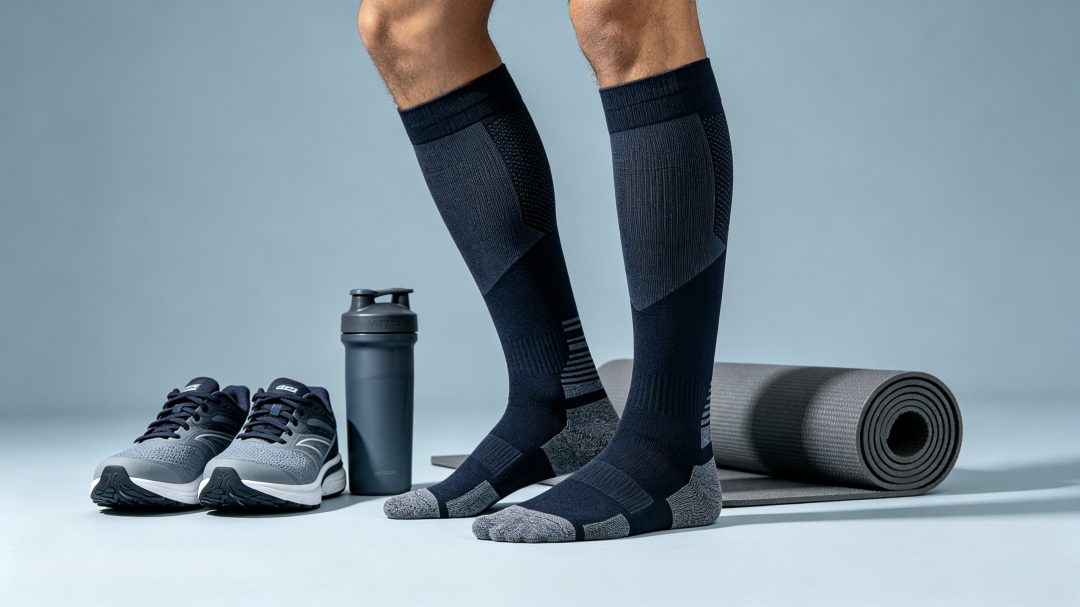
Thermal Socks (Terry Engineering) Warmth comes from trapped air in a dense terry loop inside the sock. It is a construction, not a fiber — thermal socks can be synthetic or merino, and the terry is what does the work. Best for active cold (boots, outdoor work, sport) where you are still moving and generating heat. Thermal wicks and wears well, and it holds its loft through repeated washing better than the other two, which is why it is the default for a working winter sock.
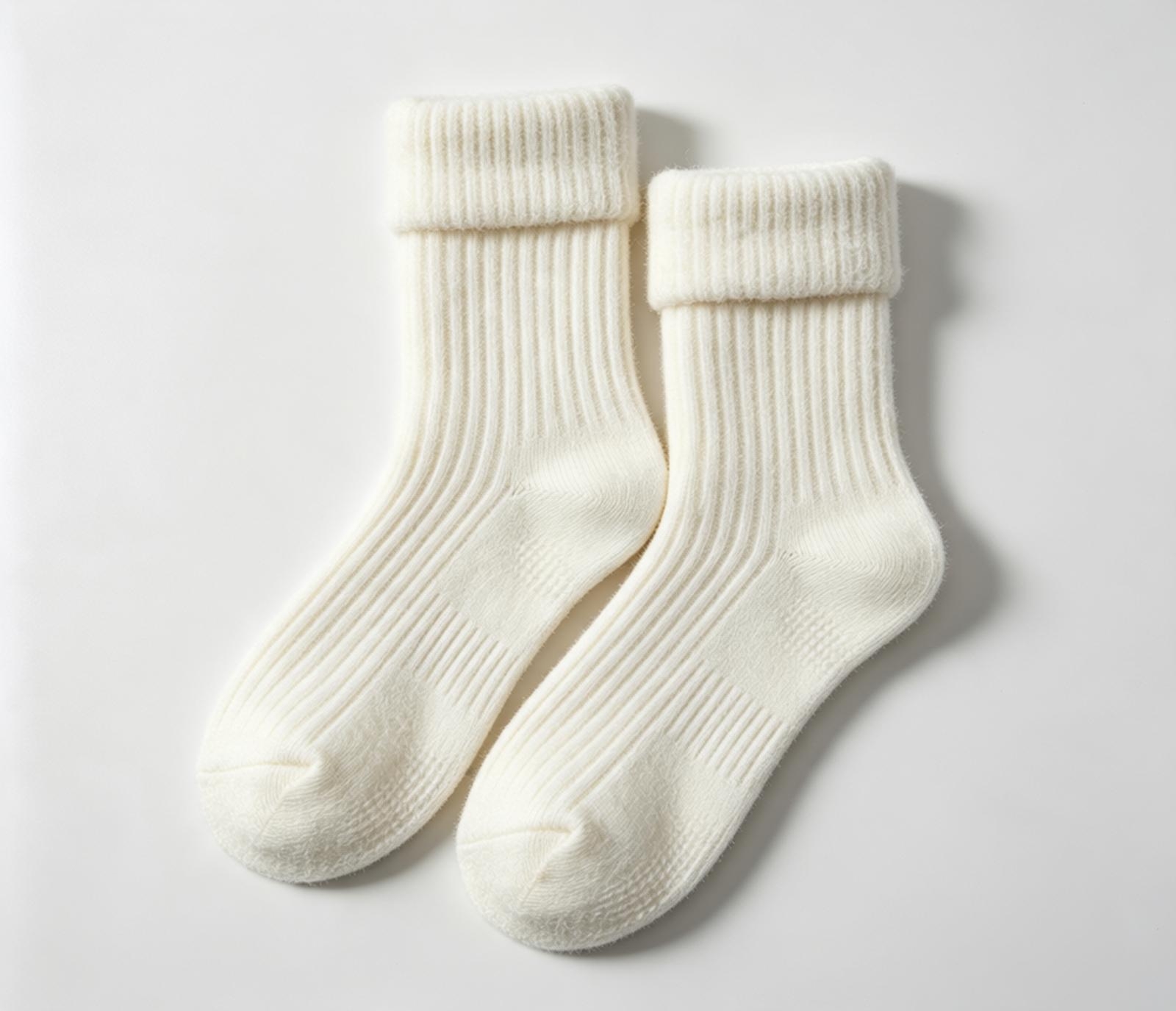
Wool Socks (Fiber Insulation) Warmth comes from the wool fiber itself — merino or lambswool traps air and buffers temperature against swings in the environment. Best for cold-and-static or cold-and-wet conditions (hiking, commuting, standing around) where odor resistance and temperature stability matter more than dry speed. Wool is slower to dry than synthetics, and pure wool wears faster at the heel, so reinforcement is essential on any wool sock intended for real use. Merino is the softer and more comfortable option for next-to-skin wear, while lambswool is warmer and cheaper but slightly coarser, which suits outer layers and occasional wear better than daily use.
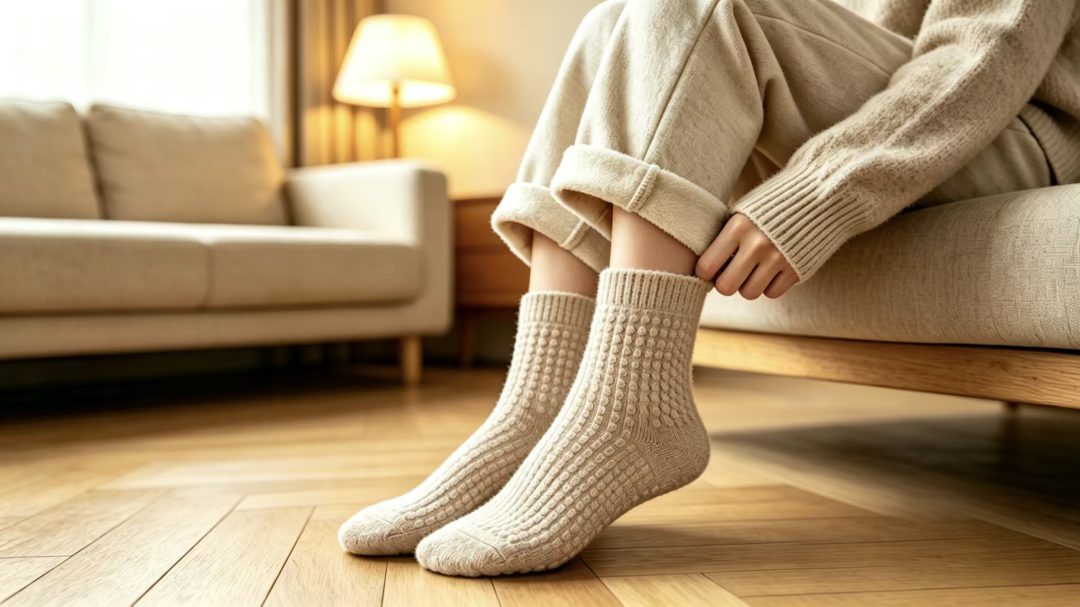
Fuzzy Socks (Plush Outer Layer) Warmth comes from a brushed or sheared outer pile (sherpa, fluff) that traps air against the skin. It is a cozy lounge layer, not a performance sock. Best for indoor wear, home and gifting, where the soft hand is the point. Not for boots or activity — the pile crushes under pressure and the fit is loose by design, so a fuzzy sock in a boot is flat, sweaty and uncomfortable within the hour.
Which to Stock – Outdoor and active cold → thermal (merino or synthetic). – Cold commute and hiking → wool. – Lounge and gift → fuzzy. A complete cold-weather line carries all three, because they serve three different buyers rather than competing for the same one. Conflating them is what causes returns: fuzzy socks do not work in boots, and a customer who buys them for that purpose will not blame their own choice.
Merchandising the Difference The three should never be shelved together as “warm socks.” Label by use — “for boots,” “for hiking,” “for home” — and state the construction on the pack, because the buyer cannot see terry density or merino percentage from the outside. We supply a simple use-based icon set for winter ranges, and it measurably reduces the mismatch returns that come from a shopper choosing by color and softness alone.
If that is settled, the next question is usually answered in Fuzzy Socks Size Chart.
FAQ
Q: Thermal or wool for boots?
A: Thermal (merino or synthetic) — wool alone is less structured for a boot and wears faster at the heel. Q: Are fuzzy socks warm enough outside? A: No — they are lounge layers; the pile crushes in a shoe and the loose fit causes friction. Q: Can thermal be wool? A: Yes — merino thermal socks combine terry construction with wool fiber, and they are the warmest option of all three.
CONCLUSION
Thermal traps air by terry, wool insulates by fiber, and fuzzy adds a plush lounge layer. Stock each for its use — active cold, commute and hike, and home — and the line covers warmth properly, with the right sock ending up on the right foot.
To move from plan to order, send artwork, size range and quantity through the Sockmader custom sock factory.
When you are ready to source, the Sockmader custom thermal socks team can quote sampling, MOQ and lead times for your quantity.